
Solution Interviews
“Lean Startup technique for testing solution concepts with potential customers after validating that the problem exists.”
You've validated the problem. Now you've got a solution concept and you need to know whether it's the right one. The team is keen to start building.
Solution interviews are a Lean Startup validation technique. You present a solution — through demo, prototype, or description — to potential customers whose problem you've already validated, and gauge whether this specific approach actually addresses it.
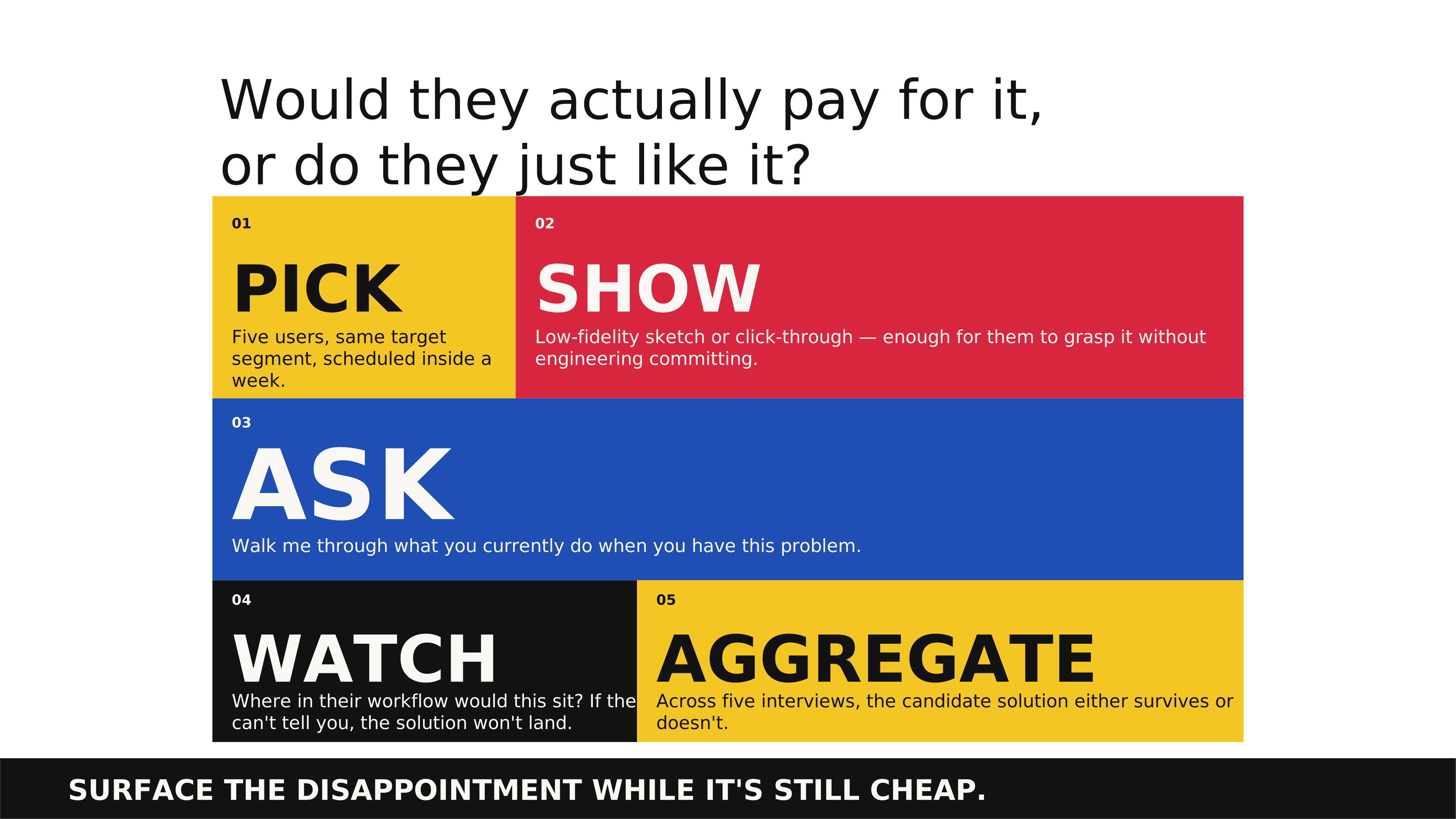
The technique bridges problem validation and product development, ensuring resources go toward solutions customers genuinely want. Reach for it after problem interviews have confirmed the pain is real. Effective solution interviews test specific elements rather than seek general approval — pricing questions and commitment signals cut deeper than "do you like it?"
The goal is learning, not selling; honest feedback matters more than positive reactions. The failure mode is running solution interviews before validating the problem, which turns the conversation into a pitch. The other trap is testing with fake prototypes so abstract that feedback tells you nothing actionable.
Your next move: When you showed your solution to a customer, did you ask whether they'd pay for it — or did you ask whether they liked it, because the answer to the second question is meaningless?
What it looked like for them
Zillionears, early 2010s. The founders built a dynamic pricing mechanism for selling music online. Fans could name their price; the system would adjust based on demand. The team was proud of the cleverness. They launched with confidence.
Within weeks, they had data telling them nobody cared. Fans who came to the site weren't there to optimise their spending — they were there to support an artist, and they paid whatever the artist asked. Fans who weren't willing to support the artist were on pirate sites, paying nothing.
The dynamic pricing solved a problem that didn't exist for either group. The founders knew this within the first month and kept building for eighteen more.
A solution interview — sitting with users and testing whether the proposed solution matches a problem they actually have — would have surfaced the mismatch in weeks rather than months. The founder named the trap in his post-mortem: the cost of admitting the premise was wrong had risen every week since the moment he first knew it.
“A stakeholder keeps changing their mind and I can't lock the scope.”