
Prototype Testing
“Evaluating solution representations with real users before committing to full development.”
You've built a prototype and you're ready to show users. But the mock-up is polished where it doesn't need to be and vague where it matters most.
Prototype testing is a pre-development validation technique. You evaluate solution representations with real users — from paper sketches through interactive mockups to working software — matching fidelity to the specific questions you need answered.
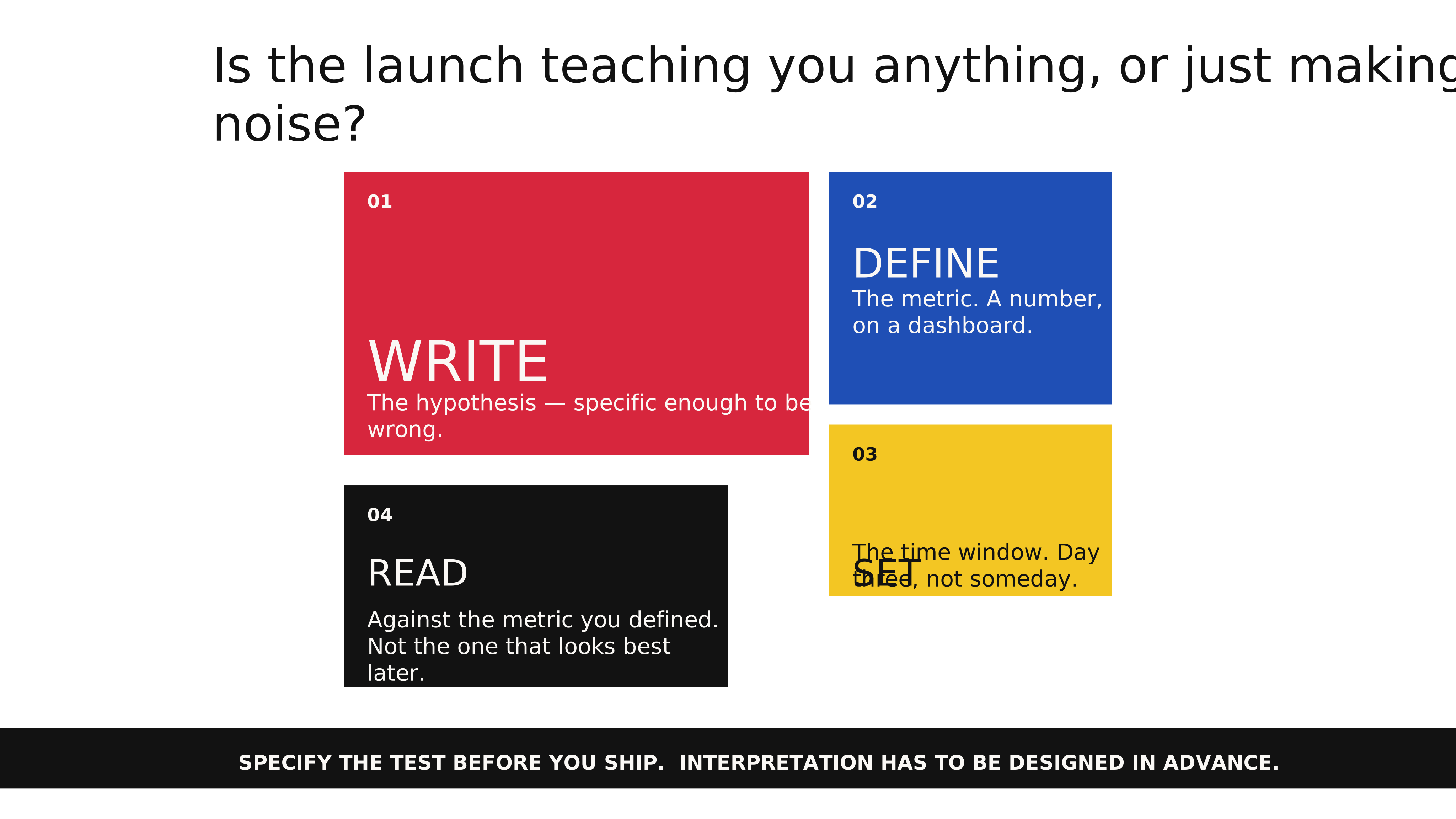
The nuance most teams miss is fidelity fit. Low-fidelity prototypes test concepts and flows cheaply; high-fidelity prototypes test detailed interactions and feasibility. Getting this wrong wastes effort in both directions — over-building when you need quick signal, or under-building when the detail is what matters.
Reach for prototype testing before committing to full development, with clear success criteria defined in advance. The failure mode is mistaking positive feedback in a controlled test for real-world validation. People behave differently when they know they're being watched, and enthusiasm in a research session doesn't predict adoption.
Your next move: What's the question you're hoping the prototype will answer — and is the fidelity you've built actually capable of answering it, or is it just expensive theatre?
What it looked like for them
Brian Chesky and Joe Gebbia, Airbnb, 2007–2008. Chesky and Gebbia couldn't make rent. They bought three air mattresses, put up a website offering "Air Bed and Breakfast" during a San Francisco design conference when hotels were full, and charged eighty dollars a night.
Three guests came. The prototype was literal: air mattresses on a floor, a basic website, and real money changing hands. It tested the riskiest assumption — that strangers would pay to sleep in someone else's flat — with real behaviour, not survey responses.
When investors later declined to fund the idea, the founders didn't stop prototyping. They designed and sold limited-edition cereal boxes ("Obama O's" and "Cap'n McCains") during the 2008 presidential campaign, raising thirty thousand dollars of runway. Every test was cheap, reversible, and grounded in whether real people would actually pay. The company that resulted is now worth tens of billions. The prototype it was built on cost three air mattresses.
“A stakeholder keeps changing their mind and I can't lock the scope.”