
Persona Development
“Creating research-based archetypal user representations that capture goals, behaviours, pain points, and contexts.”
The team keeps saying "the user" as if there's only one. Different people imagine different needs. Design decisions get made for an average person who doesn't exist.
Persona development is a user-representation technique. You create research-based archetypal characters that capture goals, behaviours, pain points, and contexts — transforming abstract segments into concrete people the team can design for.
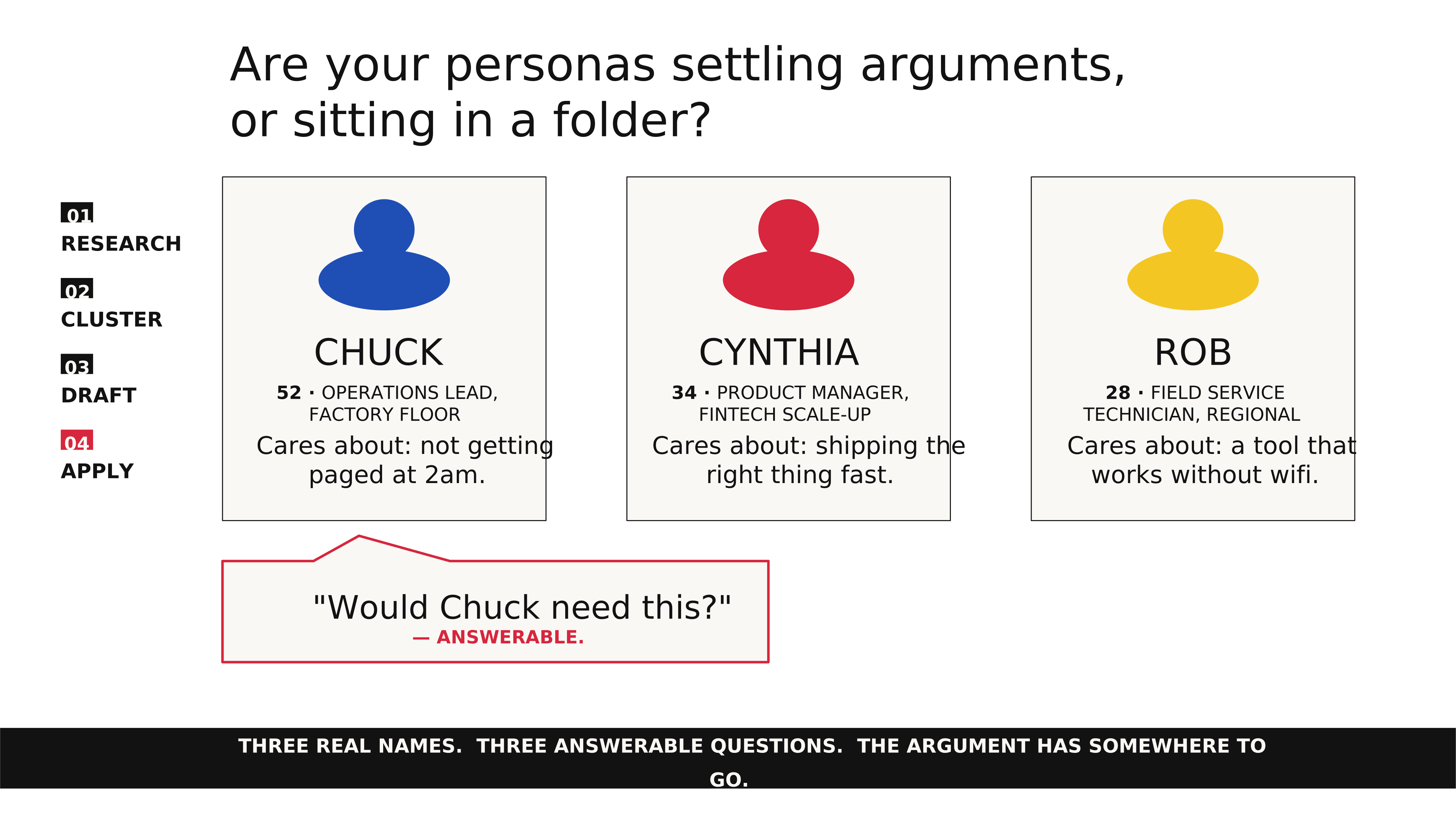
The technique's strength is making the abstract specific. Three to five well-drawn personas prevent the "average user" trap that leads to products serving no one well. Reach for it when teams are making design decisions without a shared picture of who they're building for.
Effective personas are built from research, represent meaningful behavioural differences (not demographics), and include only information relevant to design decisions. The common failure is creating elaborate personas that sit unused — decoration in a folder nobody opens. Without ongoing validation, personas also drift from reality as markets evolve, and the team ends up designing for characters that no longer exist.
Your next move: When did anyone on your team last reference a persona by name to win an argument — or are they decorative artefacts hanging in a folder no one opens?
What it looked like for them
Alan Cooper, Sagent Technology, 1995. Cooper built three personas — Chuck, Cynthia, and Rob — from in-depth user interviews at Sagent, a business intelligence company. Each persona represented a distinct cluster of tasks, goals, and skill levels drawn from real users.
The effect on the design team was immediate. Arguments about what the product should do — arguments that had been running in circles for months — suddenly had a resolution mechanism. "Would Chuck need this?" wasn't an opinion.
It was a question with a specific, documented answer. The personas were so effective at settling disputes that Sagent used them to define an entirely new product segment: the personas hadn't just influenced feature decisions, they'd reshaped the product line.
Cooper later documented this as the foundational commercial application of personas in interaction design. The technique wasn't invented as a theory. It was invented because a team couldn't stop arguing, and giving the arguments a name and a face made them answerable.
“A stakeholder keeps changing their mind and I can't lock the scope.”