
Lean Startup Methodology
“Eric Ries's approach to building businesses and products through validated learning.”
You've been shipping steadily. The roadmap's on track. But when someone asks what you've learned that changed your direction, the answer is nothing.
Lean Startup Methodology is Eric Ries's approach to building products through validated learning. You treat every initiative as an experiment, cycling through Build-Measure-Learn feedback loops, using Minimum Viable Products (MVPs) to test assumptions and making explicit pivot-or-persevere decisions.
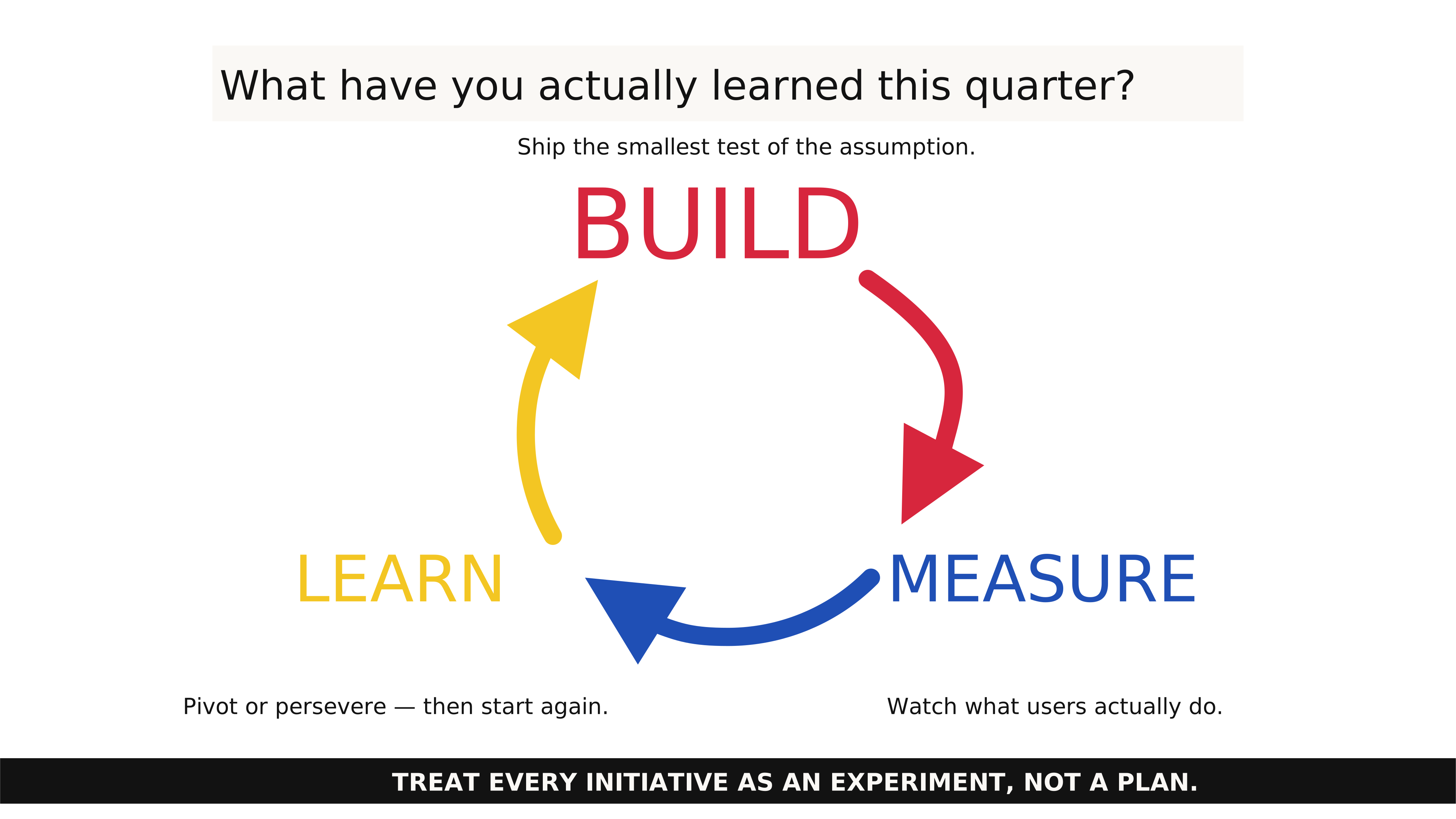
The methodology's strength is replacing planning with learning. It recognises that early-stage assumptions are usually wrong and must be tested rather than trusted. Reach for it when you're operating in uncertainty — new markets, new products, new customer segments — where the cost of being wrong outweighs the cost of moving slowly.
Genuine practice requires comfort with uncertainty and willingness to change direction based on evidence, which many organisations lack. The failure mode is borrowing the vocabulary — MVP, pivot, validated learning — without the discipline. If your "experiments" always confirm what you planned to build anyway, you're not running Lean Startup; you're running theatre.
Your next move: What have you actually learned this quarter that changed your plan — and if the answer is 'nothing', were you running experiments or just shipping?
What it looked like for them
Sergio Schuler, Teamometer, early 2010s. Schuler had an idea for a team management tool. The lean startup playbook says build-measure-learn, and Schuler followed it literally. Build: a two-page website with an explainer video and a sign-up button. Measure: cold traffic from Google AdWords, tracked to the click. Learn: not enough people clicked. Total cost: less than a week's groceries. Total time: days, not months.
The product was never built because the test said not to build it. Schuler's write-up is specific about what the experiment measured and what it didn't — it measured interest from cold traffic against a landing page, not whether the product would be good or whether he could build it.
The lean startup method worked exactly as designed: it prevented the waste of building something nobody had demonstrated they wanted. The hardest part wasn't running the test. It was accepting the result.
“A stakeholder keeps changing their mind and I can't lock the scope.”