
Jobs To Be Done
“Clayton Christensen's framework examines why people 'hire' products to accomplish specific jobs in their lives.”
Your product roadmap is full but growth has stalled. You've been improving features your competitors also have. The differentiation conversation keeps going in circles.
Jobs To Be Done (JTBD) is Clayton Christensen's customer motivation framework. You examine why people "hire" products to accomplish specific jobs in their lives — looking beyond demographics to understand the functional, emotional, and social dimensions of what they're really after.
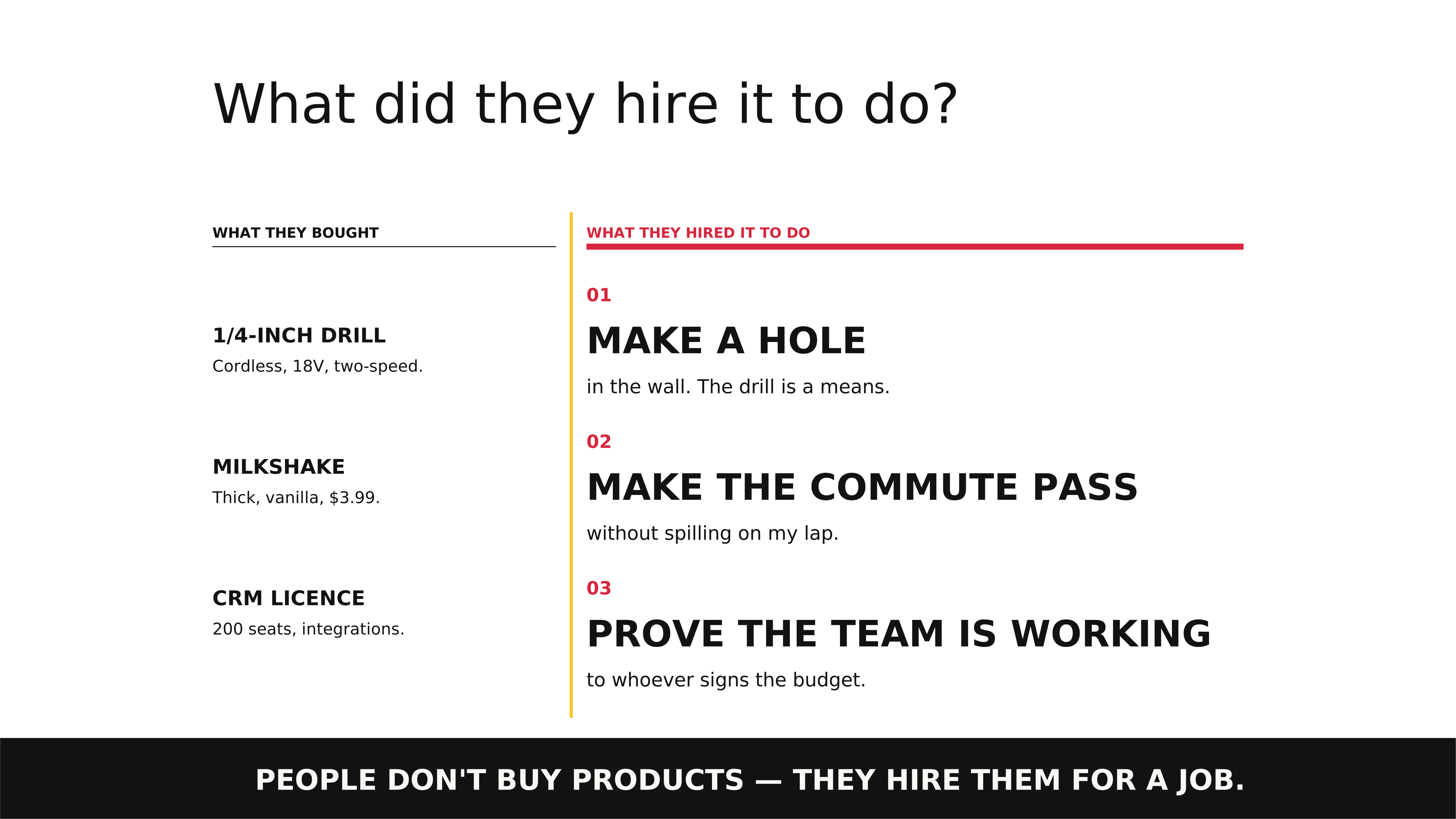
JTBD's unique strength is reframing competition. People hire milkshakes to solve the same job as bananas and boredom — your real competitors are rarely who you think they are. Reach for it when you're optimising features but can't explain why growth has plateaued.
JTBD interviews explore switching moments — when customers changed solutions — to uncover what triggered the move and what they were actually seeking. The technique needs deep customer research to work; without it, you're just relabelling features as "jobs" and calling it insight. It also fits poorly with commodity products where the job is obvious and price is the only variable.
Your next move: What job is your customer actually trying to get done — and if you described your competition by that job rather than your industry, who would actually be on the list?
What it looked like for them
Pumodo, early 2010s. The founders built a sports app because they wanted live match data as spectators. That was the job they were solving: help fans follow games in richer detail. The problem was that fans following games wasn't the job users were hiring the app to do.
Players — the people generating the data — had a completely different job: track personal performance for their own improvement. Spectators wanted passive consumption; players wanted active logging.
The two jobs were structurally different, and the app had been designed for only one of them. In their post-mortem, the founders were specific: "We loved the idea of it. That hurt." They'd built for the job they imagined rather than the job users actually had.
Jobs to Be Done insists on the distinction between the job you think you're solving and the job the user is actually hiring your product to do. Pumodo solved the first. Nobody hired it for the second.
“A stakeholder keeps changing their mind and I can't lock the scope.”