
Hypothesis-Driven Development
“Structuring work as explicit hypotheses: 'We believe X will result in Y. We know we've succeeded when Z.'”
The roadmap is full of features. Everyone's busy building. But nobody can say what they expect each feature to change, or how they'd know if it worked.
Hypothesis-Driven Development (HDD) is a structured experimentation technique. You frame every piece of work as an explicit hypothesis — "We believe X will result in Y; we'll know we've succeeded when Z" — and define success criteria before building begins.
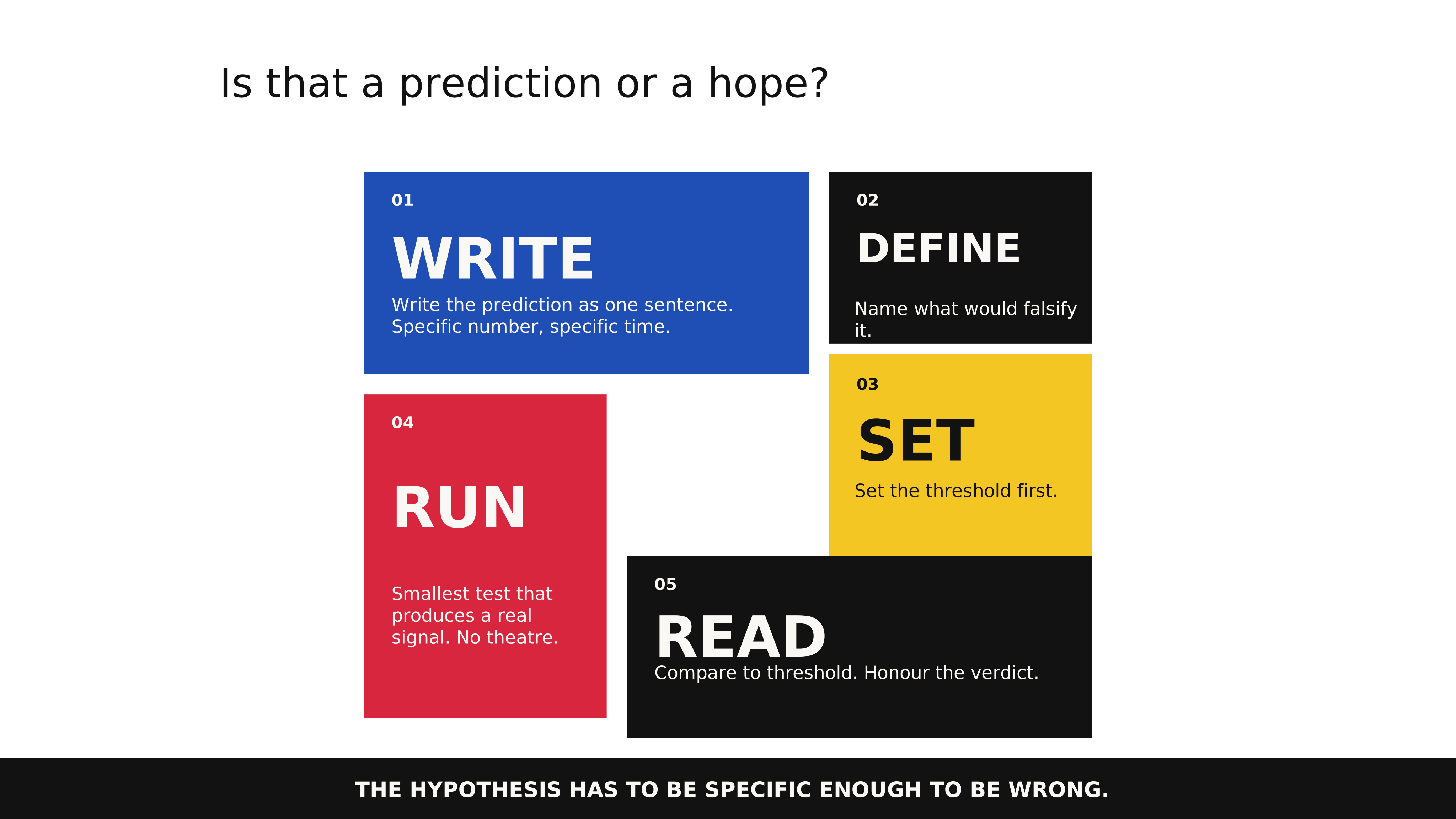
The technique's strength is making guesses visible. When you force a team to write a falsifiable prediction, the difference between evidence and assumption becomes obvious. Reach for it when the team is shipping features as deliverables rather than treating them as experiments.
HDD requires cultural comfort with being wrong — hypotheses are meant to be tested, not proven. The failure mode is writing hypotheses so vague they can't actually fail, which preserves the ritual while gutting the discipline. Without measurement capability to close the loop, the predictions become decoration on a ticket.
Your next move: Write the hypothesis behind the next feature on your roadmap as 'We believe X will cause Y' — does it sound like a confident prediction, or a hope?
What it looked like for them
Sergio Schuler, Teamometer, early 2010s. Before building anything, Schuler wrote down what success would look like: a specific click-through rate on a landing page, from cold traffic, within a fixed budget. That was the hypothesis. Not "people will like this" — a testable, falsifiable claim with a number attached. He built the two-page site, ran the ads, and watched the data. The click-through fell below his threshold. Project shelved.
The discipline wasn't in the test — anyone can build a landing page. The discipline was in committing to the threshold before the data arrived. Running a test without deciding in advance what the result would mean is just watching numbers.
Schuler decided what "enough" meant first, then measured. When the measurement said no, the decision was already made. Hypothesis-driven development works when the hypothesis is specific enough to be wrong — and the team has agreed in advance to act on the answer.
“A stakeholder keeps changing their mind and I can't lock the scope.”