
Empathy Maps
“A visualisation capturing what users say, think, do, and feel.”
The team talks about "the user" like a single person. Everyone has a different picture in their heads. Design decisions keep getting made from assumption.
Empathy maps are XPLANE's user-understanding technique. You capture what a specific user segment says, thinks, does, and feels — along with their pains and gains — synthesising research into a single visual.
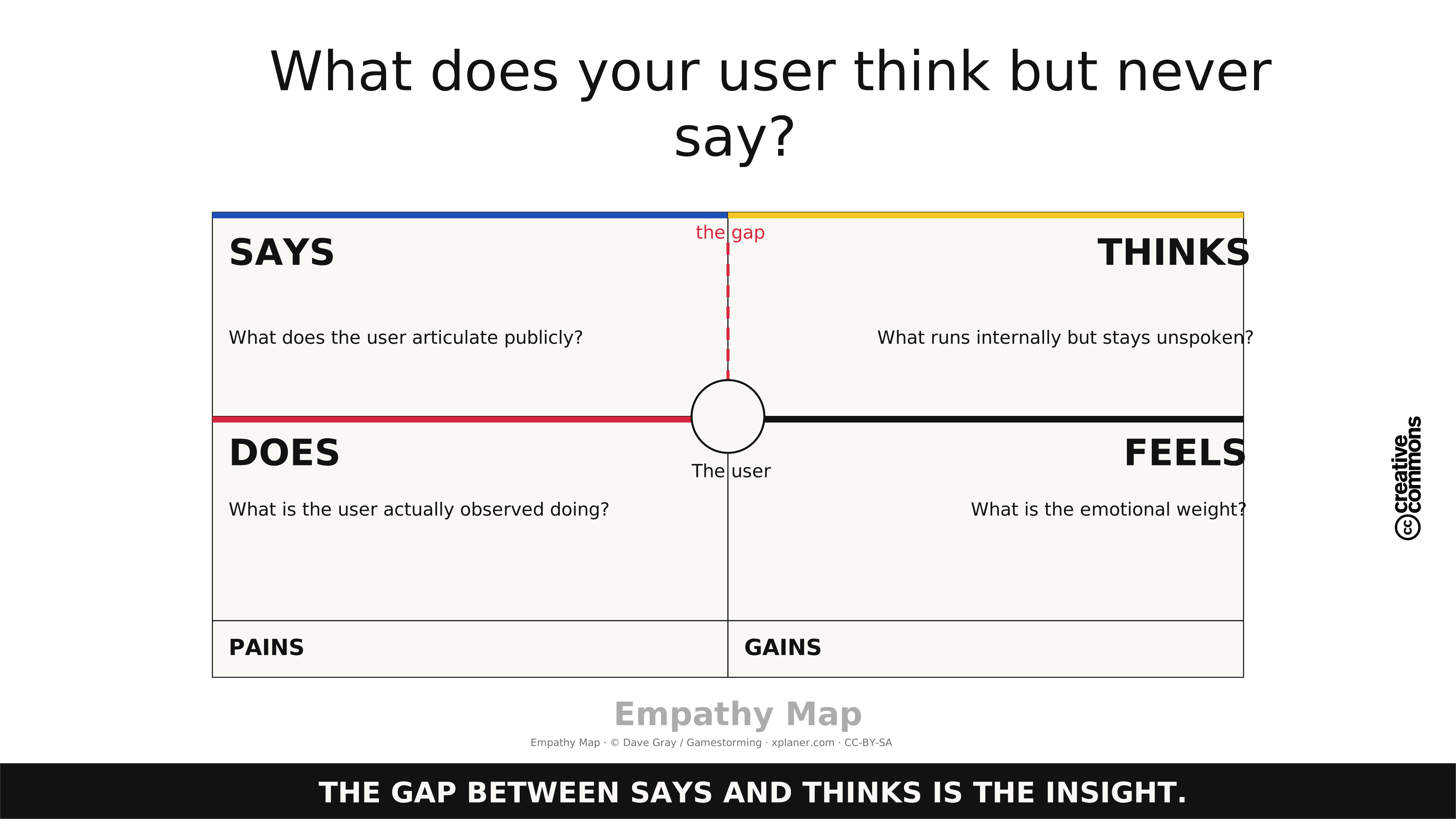
The gap between "Says" and "Thinks" is where the most valuable insights live — what people articulate publicly rarely matches their internal experience. Reach for it after customer research, when you need to build shared understanding across a team quickly. The format works particularly well for stakeholders who won't read a detailed report.
Maps should represent specific user segments rather than generic composites; averaging across segments destroys the specificity that makes empathy actionable. The failure mode is filling in the quadrants from assumption rather than research, which produces a confident-looking artefact that reinforces whatever the team already believed.
Your next move: What does your user actually think but never say out loud — and would you bet money on the answer, or are you guessing in the next meeting?
What it looked like for them
Russ Laraway, Google, mid-2010s. Laraway was managing a direct report — Jane — and asked her a question most managers skip: what do you want your life to look like in ten years? Jane's answer was unexpected. She wanted to own a spirulina farm.
Laraway didn't redirect her toward a Google-shaped career. He listened to what the answer revealed about what she thought, felt, said, and did — the four quadrants of an empathy map, applied to a person rather than a customer.
Jane thought like an entrepreneur. She felt constrained by corporate structure. She said she wanted ownership. She was doing excellent work but for someone else's reasons. Laraway restructured her role around launching and owning product lines inside Google — work that rehearsed the skills she'd need for the farm. She stayed years, did unusually good work, and left to build the thing she'd always wanted. The empathy map was a conversation, not a workshop.
“A stakeholder keeps changing their mind and I can't lock the scope.”