
Design Thinking
“A human-centred approach to innovation moving through five phases: Empathise, Define, Ideate, Prototype, and Test.”
The team's been generating solutions for weeks. There are Post-its everywhere. But when you ask what problem they're actually solving, the answers don't match.
Design Thinking is IDEO's human-centred approach to innovation. You move through five phases — Empathise, Define, Ideate, Prototype, and Test — investing in understanding users before generating solutions.
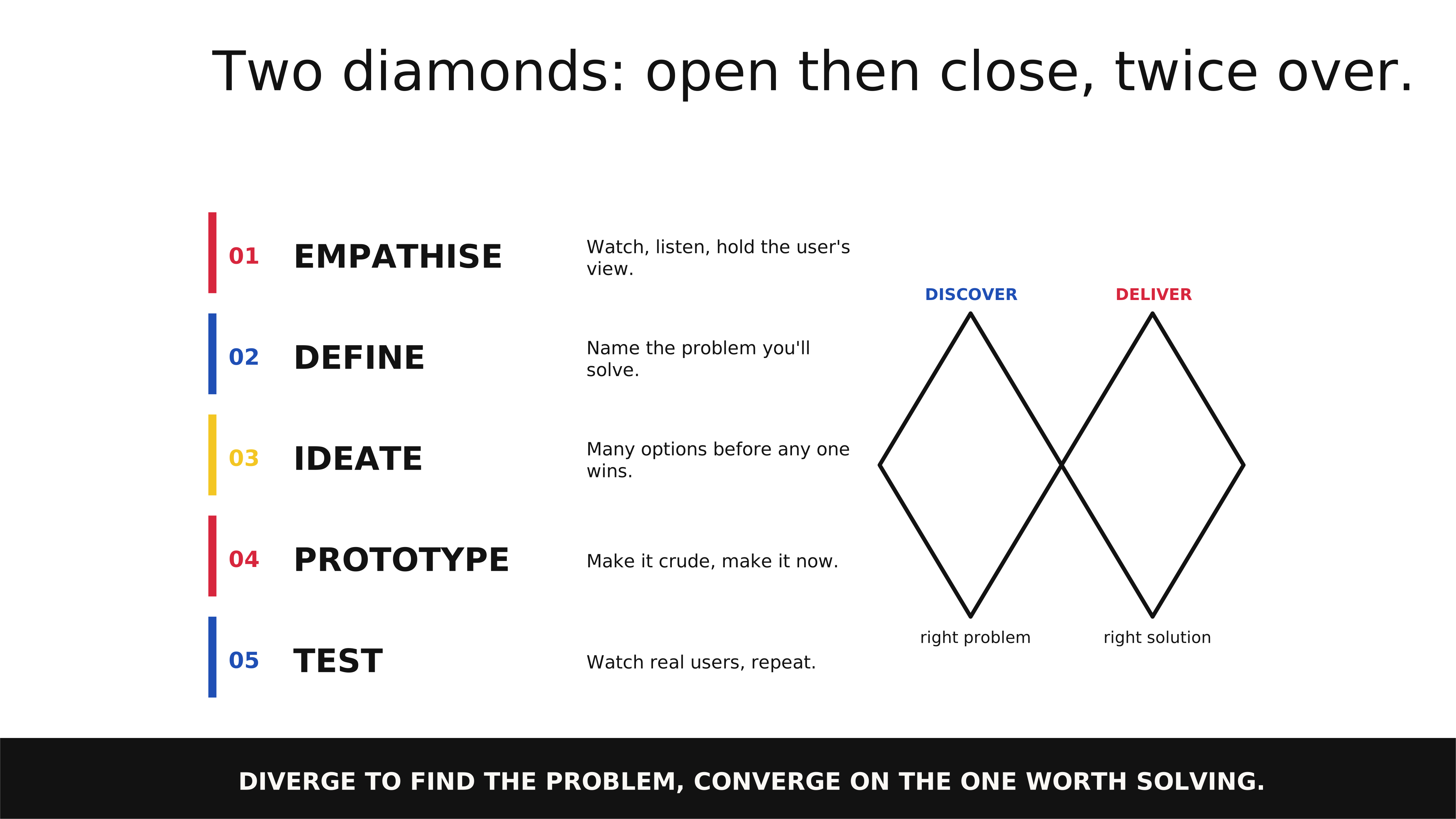
Its strength is preventing the common trap of building what teams assume users need. The framework works on genuinely ambiguous problems — where you don't yet know enough to apply analytical methods because you haven't properly understood what you're solving. Reach for it when the problem space is unclear and the team is itching to jump to answers.
The discipline lives in the early phases: skip Empathise and Define, and the rest becomes solution theatre with user-centred branding. The technique has spread from design studios to corporate programmes, though the quality of its application varies enormously — a two-day workshop doesn't create a human-centred culture.
Your next move: How long has the team been generating solutions before you ever properly defined the problem — and could you write the problem statement in one sentence right now?
What it looked like for them
Stewart Butterfield, Slack, 2012–2014. Tiny Speck's game Glitch was dying. Player numbers had thinned past the point of recovery. Butterfield's response wasn't to fix the game — it was to empathise with what his own team was actually doing all day. They were communicating. The internal tool they'd built to talk to each other across time zones had become the most-used piece of software in the company.
Butterfield defined the real problem (the game was over), ideated around what was already working (the communication tool), prototyped a standalone version, and tested it with external teams. Empathise, define, ideate, prototype, test — compressed into a company pivot.
Slack launched in 2013, reached a million daily users within a year, and sold to Salesforce for $27.7 billion. The design thinking process didn't generate the idea. It created the discipline to recognise a solution that was already there and discard the thing the team had been emotionally attached to.
“A stakeholder keeps changing their mind and I can't lock the scope.”