
Customer Journey Mapping
“A visualisation technique documenting the complete customer experience across all touchpoints.”
Customers are dropping off and nobody can agree on why. Each team owns a piece of the experience. None of them see the whole picture.
Customer journey mapping is a visualisation technique. You document the complete customer experience across every touchpoint — capturing stages, actions, thoughts, emotions, pain points, and opportunities in a single view.
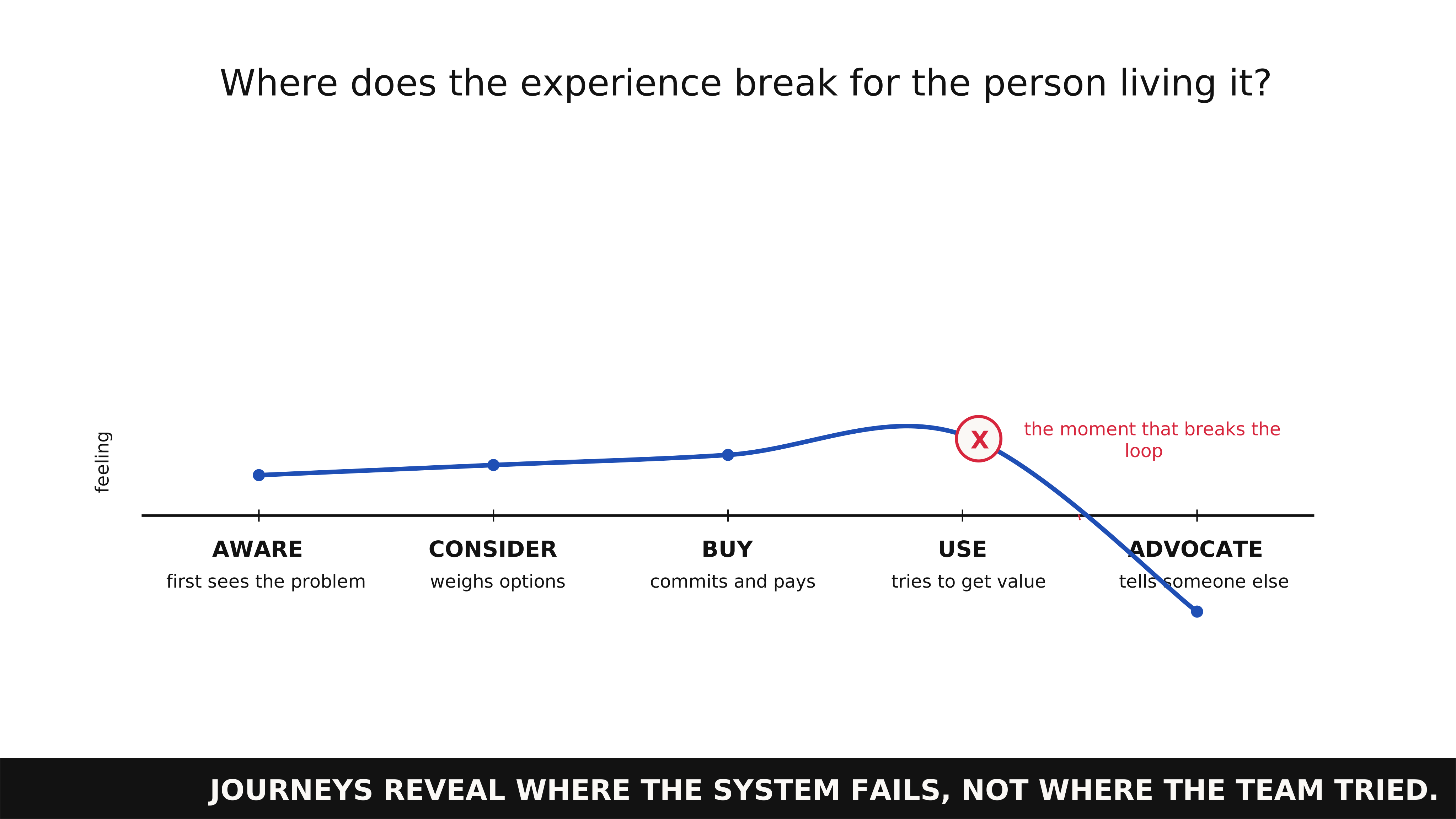
Its strength is forcing the organisation to see itself through customer eyes — often an uncomfortable experience that reveals how internal silos create a fragmented reality. Reach for it when different teams own different parts of the experience and nobody's accountable for the seams between them.
Maps built from research expose moments that matter — the interactions that disproportionately shape perception. The failure mode is building the map from assumptions rather than data, which just visualises what the organisation already believes. The other risk is scope: for single-touchpoint products, a journey map adds formality without insight.
Your next move: Walk through your product as a brand-new customer for ten minutes — what's the first thing that makes you want to give up, and why is it still there?
What it looked like for them
Pumodo, early 2010s. Pumodo was a sports app designed to let spectators track live match data — scores, stats, play-by-play. The founders built it for themselves: football fans who wanted richer data during games.
The problem was the other side of the journey. Players — the people generating the data — had no reason to log their performance for spectators they'd never meet. The app needed both sides, and the founders had only walked one side of the customer journey.
In their post-mortem, they named the gap directly: "We were not users of our own product. We didn't obsess over it and we didn't love it. We loved the idea of it." The journey they'd mapped was the spectator's journey. The journey they'd ignored — the player's — was the one the product depended on. Customer journey mapping that only covers the user you identify with is half a map.
“A stakeholder keeps changing their mind and I can't lock the scope.”