
Customer Interviews
“Direct conversations with customers to understand their needs, behaviours, and contexts.”
You're making decisions about what to build next. The data says one thing. The team believes another. Nobody's spoken to an actual customer in weeks.
Customer interviews are Steve Blank's Customer Development technique. You have direct conversations with customers or potential customers, exploring their needs, behaviours, and contexts — asking about specific past actions rather than hypothetical futures.
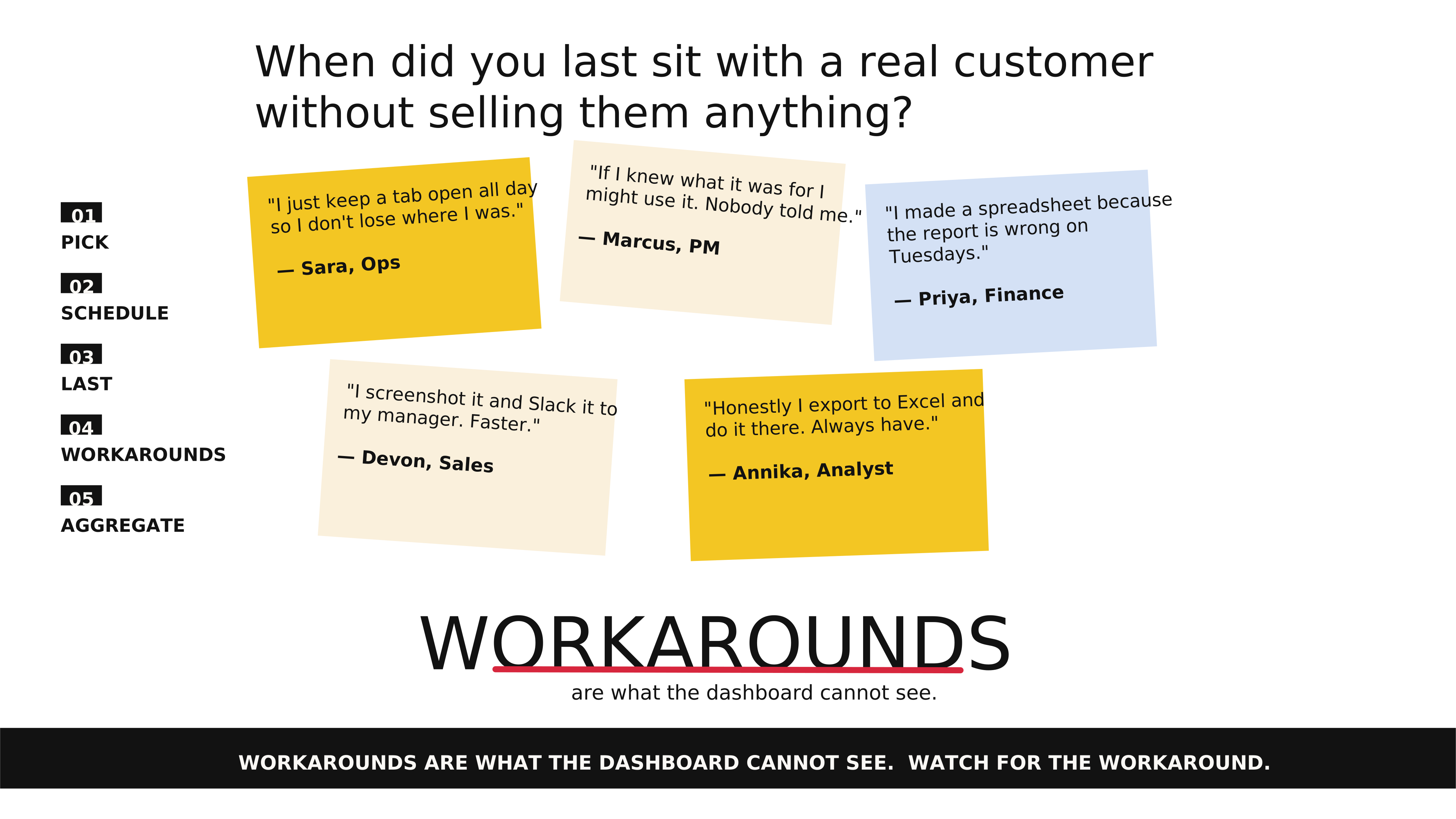
The technique reveals what surveys and analytics can't — the reasoning behind behaviours and the emotional weight of decisions. Reach for it whenever your understanding of user needs feels assumed rather than observed. Regular interviews keep product teams connected to reality as things evolve.
The traps are well-known but persistent: leading questions, talking more than listening, and interpreting politeness as validation. Without clear research goals beforehand, interviews drift into casual chats that feel productive but yield nothing you can act on.
Your next move: When did you last sit with a real customer for an hour without trying to sell them anything — and if it was more than a month ago, what are you actually building from?
What it looked like for them
HowDo, late 2010s. HowDo was a DIY project-sharing platform with 1.7 million lessons published, seven thousand projects, and high engagement across every metric the team tracked. The dashboard said unambiguous success. None of the engagement generated revenue. The community was vibrant; the business was dying. The founders had built exactly what users wanted to use for free — and never interviewed those users about what, if anything, they'd pay for.
The gap between what users did on the platform and what they valued enough to spend money on was invisible from the dashboard. Customer interviews — the kind that ask about workflow, pain, and willingness to change rather than satisfaction — would have surfaced that gap before the metrics became decorative.
The founders chose not to be blinded by the numbers and put the site into permanent hibernation with an honest shutdown note. The dashboard had been telling the truth. It had been telling the truth about the wrong game.
“A stakeholder keeps changing their mind and I can't lock the scope.”