
Assumption Mapping
“A technique from Strategyzer that plots assumptions on axes of importance versus certainty.”
The plan looks solid on paper. Everyone's confident. But when you press on how you know the key premise is true, the room goes quiet.
Assumption Mapping is Strategyzer's risk-surfacing technique. You list every assumption behind your plan, then plot each on two axes — importance and certainty — so the dangerous ones become visible.
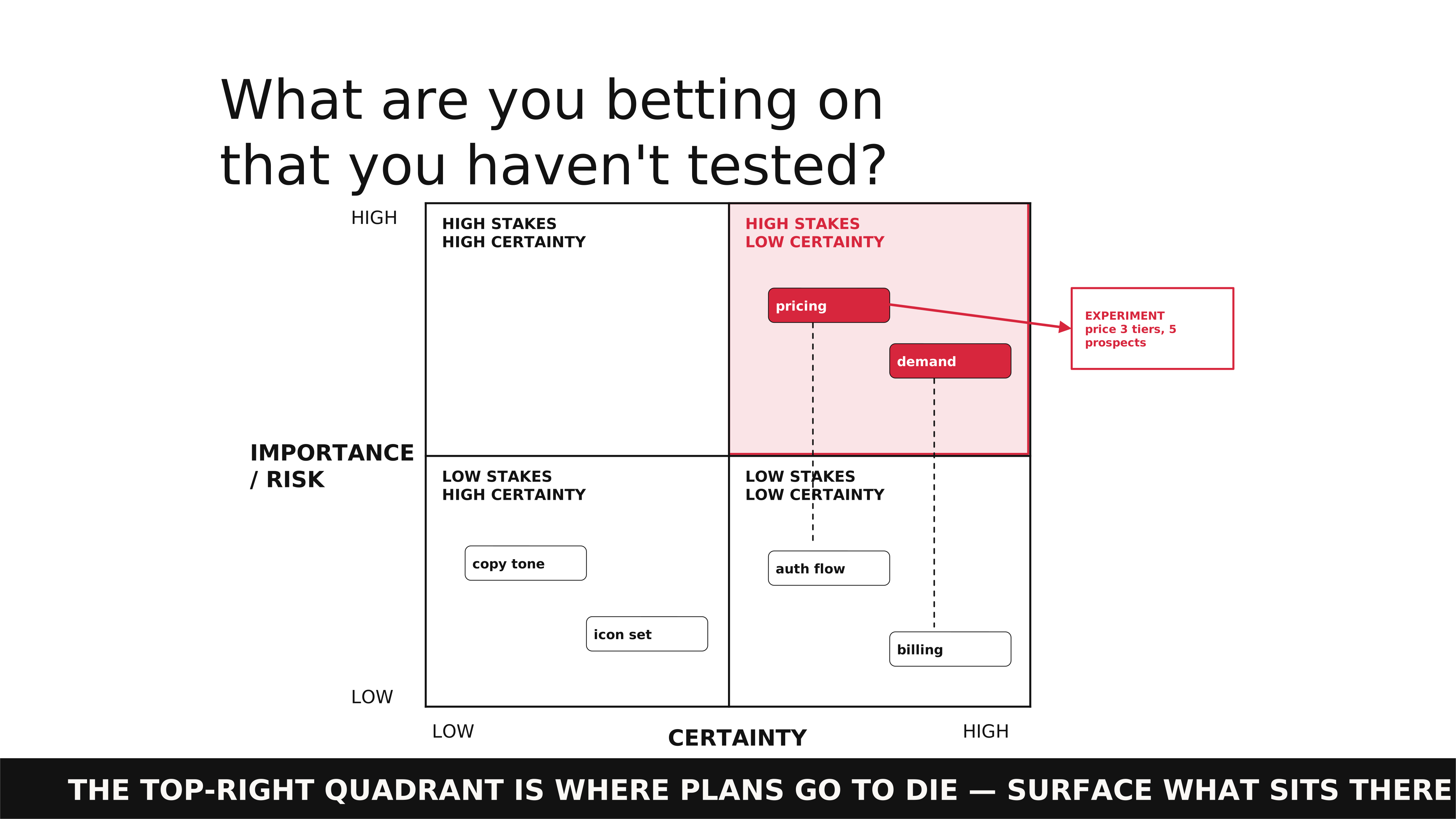
The high-importance, low-certainty quadrant is where plans go to die. That's where this tool earns its keep: it forces teams to admit the difference between what they know and what they believe. Reach for it before committing significant resources to any plan built on untested premises.
The map becomes a research agenda — each risky assumption turns into an experiment. The failure mode is treating the exercise as cathartic rather than actionable. If you map your assumptions but never actually test the dangerous ones, you've just organised your ignorance and moved on feeling better about it.
Your next move: What's the single assumption that, if wrong, would invalidate everything in the next meeting — and have you ever actually tested it?
What it looked like for them
Backfence, 2005–2007. Backfence was a hyper-local citizen journalism platform where neighbourhoods could publish their own news. The idea was sound. The early communities were engaged. The assumption underneath — that geographical expansion would work the same way in every new location — was never examined.
The founders kept adding cities. Each new city needed its own critical mass of contributors, its own local champions, its own reasons to exist. None of that transferred automatically from the last one.
Resources spread across a dozen communities, none of which reached the density that made the first ones work. Capital ran out before any single expansion had proved itself.
The assumptions that drove expansion — "what worked in one suburb will work in the next" — were never mapped, never tested, never questioned until the burn rate answered the question for them. Assumption mapping exists for exactly this failure mode: the beliefs the team is acting on without noticing they're beliefs.
“A stakeholder keeps changing their mind and I can't lock the scope.”