
Opportunity Solution Tree
“Teresa Torres's framework connecting outcomes to solutions through opportunity spaces.”
The team jumped straight to a solution. It felt obvious at the time. Now you're three sprints in and nobody can explain which customer problem it solves.
The Opportunity Solution Tree (OST) is Teresa Torres's continuous discovery technique. You map a desired outcome at the top, branch into opportunity spaces beneath it, then hang specific solutions off each opportunity — making the reasoning chain visible.
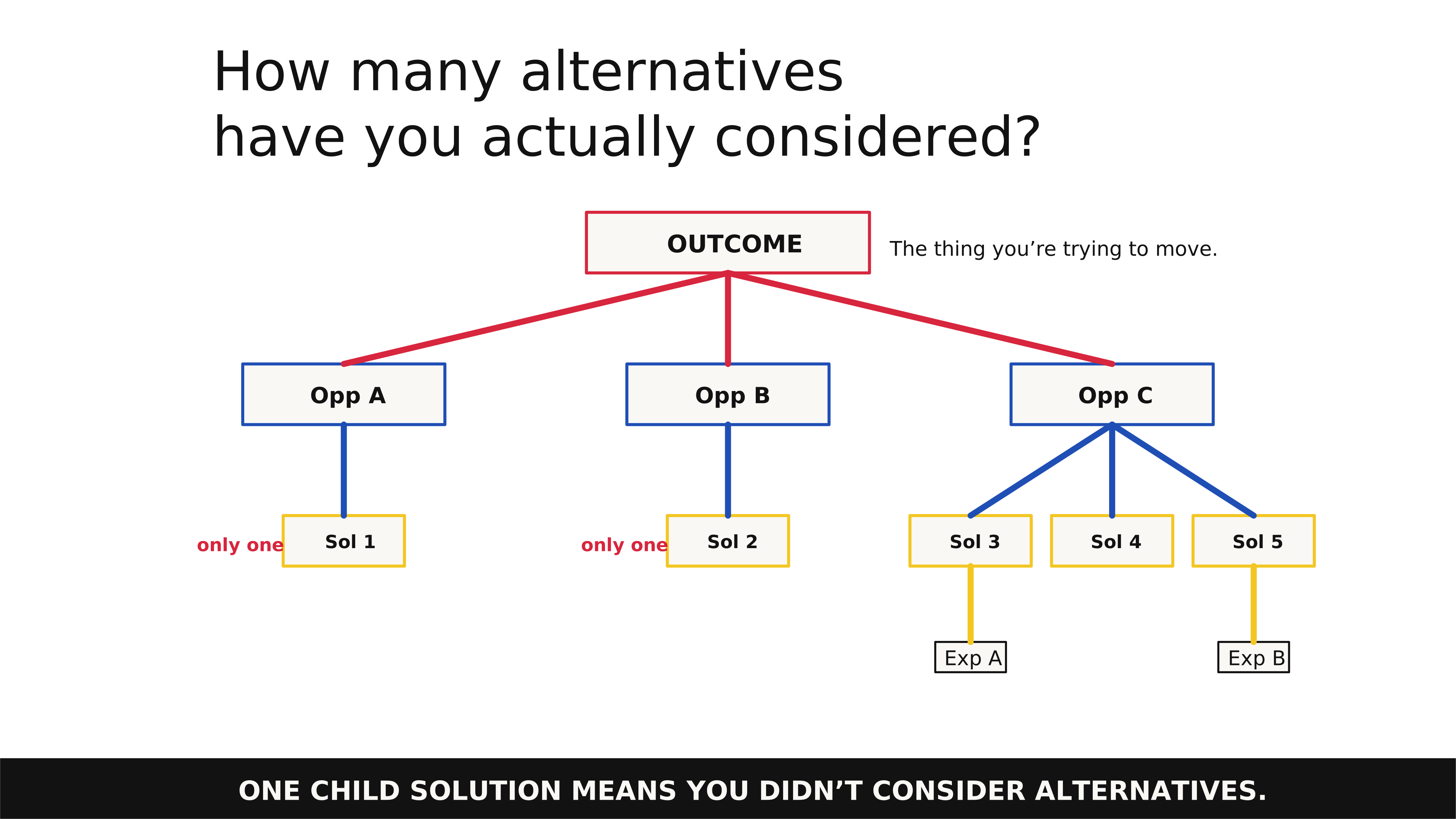
The tree's power is in slowing teams down before they commit. It forces you to name the opportunity a solution addresses, which exposes how often teams have converged on one idea without exploring alternatives. Reach for it when discovery feels like a formality rather than genuine exploration.
The trap is treating the tree as a one-off artefact rather than a living document — an OST that isn't updated with new research becomes decoration. It also struggles without continuous customer contact; opportunities filled from assumptions rather than evidence just organise your guesses more neatly.
Your next move: How many alternative solutions have you actually considered for the opportunity you're about to commit to — or have you been defending the first idea since the start?
What it looked like for them
Plancast, 2010–2012. Plancast was a social platform for sharing future plans — where you were going, what you were doing this weekend. Early adopters loved it. The tech press covered it.
The founder, Mark Hendrickson, built feature after feature on the assumption that early traction would convert to sustained usage. It didn't. Sharing future plans isn't a daily habit for most people, and no feature could turn an occasional behaviour into a habitual one. The problem wasn't execution.
It was that the opportunity space — "people want to share their plans" — had been assumed rather than mapped. An opportunity solution tree would have forced the question earlier: which customer behaviour are we trying to change, what evidence do we have that it's changeable, and how many alternative ways could we serve the same underlying need?
Hendrickson's post-mortem acknowledges it: enthusiasm from technology-minded early adopters masked the question of whether the behaviour was habitual for a mainstream audience.
“A stakeholder keeps changing their mind and I can't lock the scope.”