
T-shirt Sizing
“A relative estimation technique using sizes (XS, S, M, L, XL) rather than precise numbers.”
Someone's asked for effort estimates on next quarter's roadmap. The team barely understands the items. A number will imply certainty nobody feels.
T-shirt sizing is a relative estimation technique using sizes — XS, S, M, L, XL — rather than precise numbers. You compare items against each other and against previous work of similar complexity, calibrating what each size means in your team's context. The imprecision is the point.
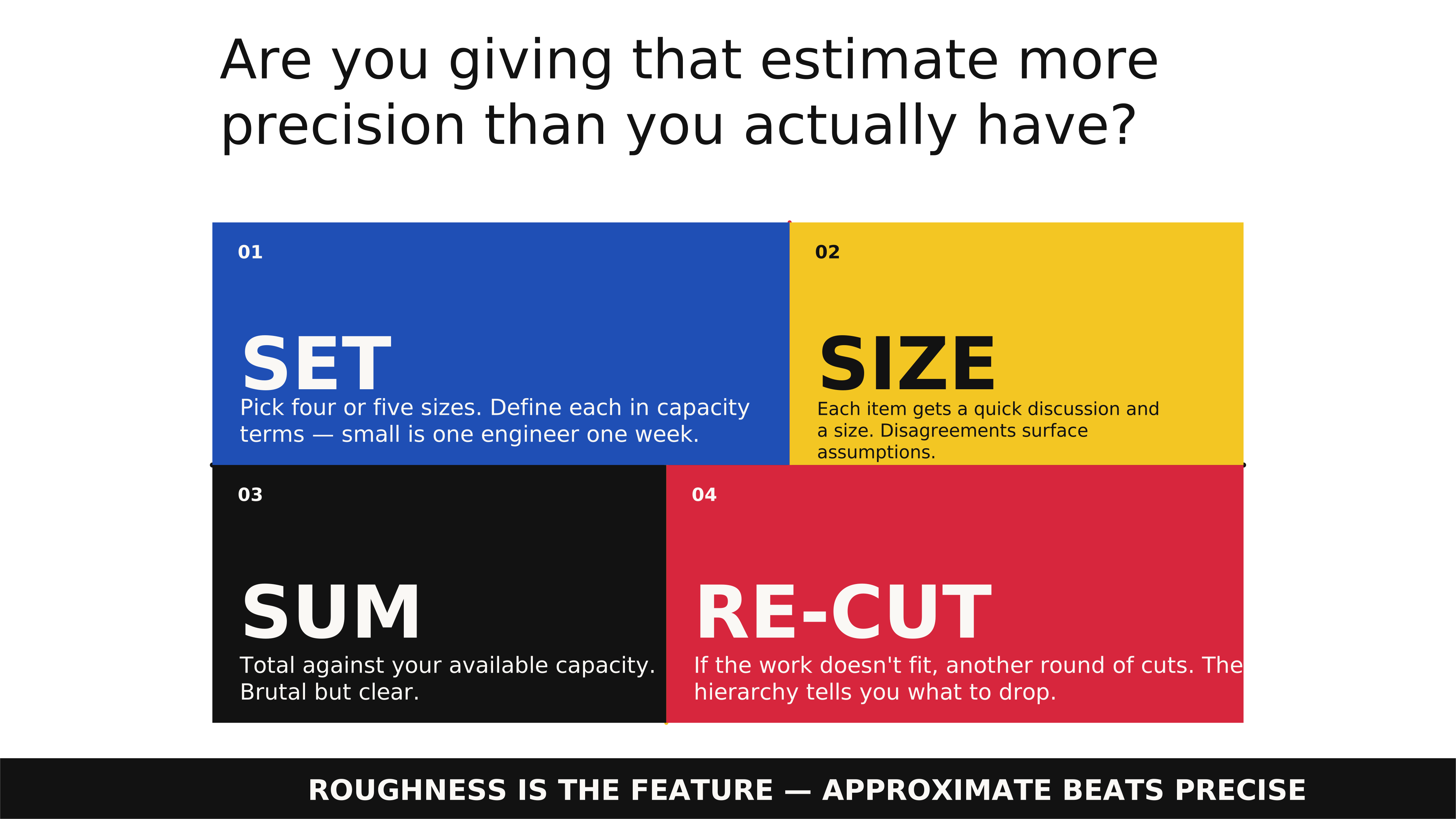
The unique strength is honesty about uncertainty. Sizes resist the false confidence that numbers create — nobody commits to an XL the way they commit to "47 story points". Use it for roadmap discussions, portfolio-level prioritisation, and any conversation where detailed estimates aren't yet justified.
Teams calibrate quickly, and stakeholders find sizes easier to engage with than abstract point scales. It falls apart without that calibration — if the team hasn't agreed what an L means, the sizes are just labels — and it's wrong when genuine precision is needed for scheduling or contracts.
Your next move: Which roadmap item have you given a number to that you only understand at T-shirt level — and who's about to commit to that number as if it were real?
What it looked like for them
Marvel Entertainment, 1996–1998. Marvel filed for bankruptcy in late 1996 with roughly two hundred and fifty million dollars in debt and collapsing comic book sales. The strategic options ranged from restructuring the publishing business to licensing the character IP to pivoting entirely into media production.
The team needed to size those options fast — not with detailed financial models but with a rough sense of which were small enough to execute immediately and which were too large to attempt without external capital.
The licensing pivot — the one they ultimately chose — was the medium-sized bet: it didn't require rebuilding the business or raising billions, just renegotiating how the IP was used. Marvel Studios formed in 2005. Iron Man released in 2008. Disney acquired Marvel for four billion dollars in 2009.
The thing worth saving wasn't the business they were running. It was the characters. T-shirt sizing doesn't produce precise estimates. It produces the rough ordering that lets a team under pressure decide which options to explore first and which to set aside. Marvel needed rough. Rough was enough.
“The deadline moved and nobody told my team.”