
Resource Allocation
“Where resources actually go is the clearest signal of what strategy actually is.”
The strategy deck says innovation is the priority. The team's calendar says maintenance gets 80 per cent of their hours. Nobody's reconciled the two.
Resource allocation is the discipline of matching finite capacity — particularly skilled people — to competing demands across initiatives. You map what's available against what's needed, apply clear prioritisation criteria, and build mechanisms for adjusting as circumstances shift.
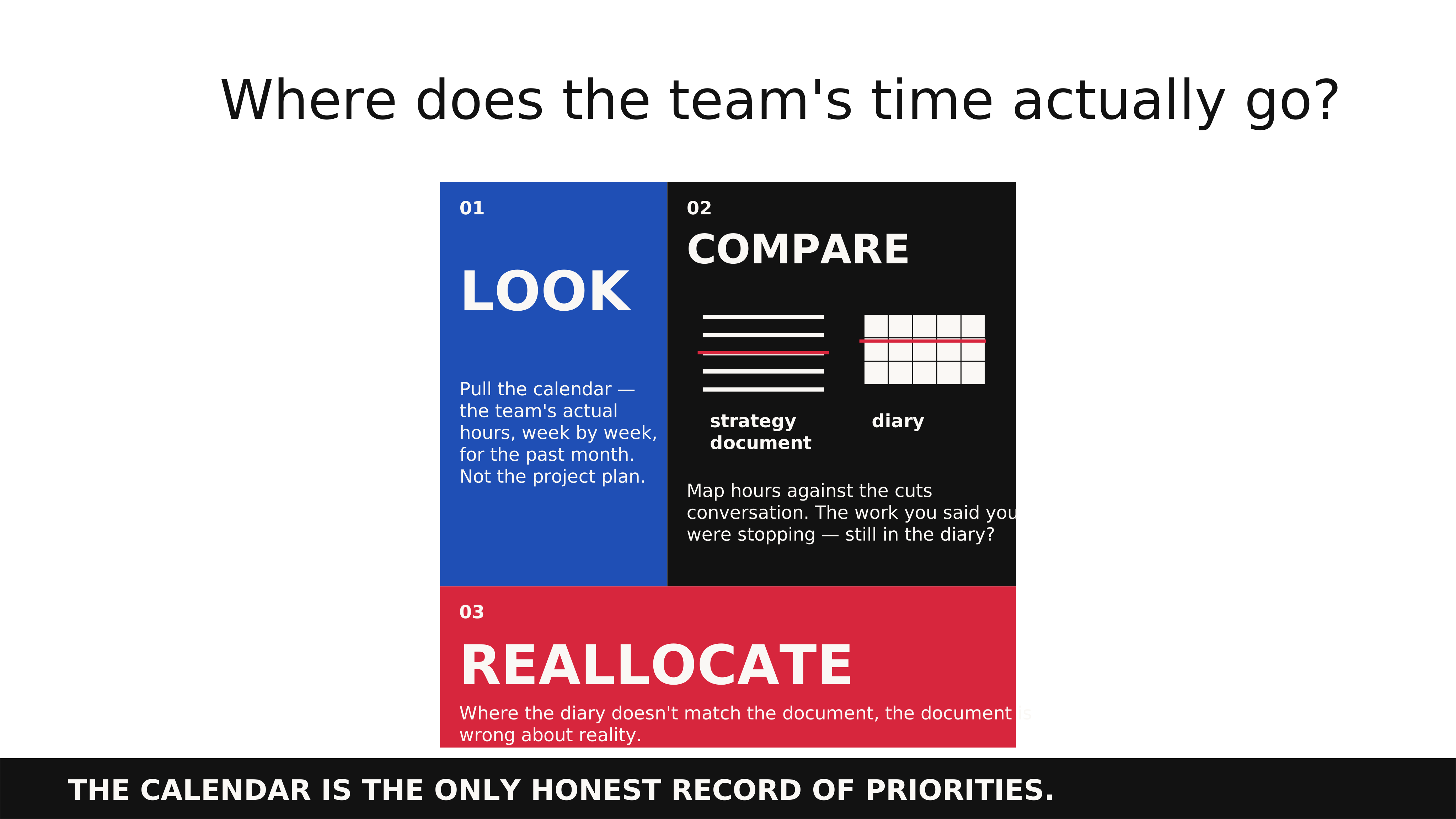
The unique strength is that it makes real priorities visible. Where resources go is the clearest signal of what strategy actually is, regardless of what any presentation says. Reach for it when commitments outstrip capacity, or when the portfolio feels unbalanced but nobody can show why.
If you only do the exercise annually, you're managing last year's priorities with this year's people. It fails without strategic priorities to allocate against, and it fails when over-optimised — people aren't interchangeable units, and treating them that way produces spreadsheet fiction.
Your next move: Look at where your team's hours actually went last month — does that allocation match the strategy you're about to defend in the next meeting, or are you defending fiction?
What it looked like for them
Jørgen Vig Knudstorp, LEGO, 2003. LEGO was eight hundred million dollars in debt, with resources spread across theme parks, apparel lines, video games, and a brick catalogue of thirteen thousand unique designs — most appearing in a single set and never again.
Every initiative had its own team, its own budget, its own justification. None had been measured against the others. Knudstorp's move was reallocation by subtraction. He sold the theme parks. He halved the brick catalogue. He closed the apparel and licensing operations.
The resources freed up — capital, engineering time, shelf space, management attention — were redirected to the core construction sets. The company didn't find new resources. It stopped spending the ones it had on things that weren't working.
Resource allocation isn't just about where to invest. It's about where to divest — and the discipline to act on the answer. LEGO's recovery was funded entirely by resources it had already been spending. They were just being spent on the wrong things.
“The deadline moved and nobody told my team.”