
Planning Poker
“A consensus-based estimation technique where team members simultaneously reveal cards showing their estimate.”
The team's nodding along to estimates that one person suggested. Nobody's challenged them. The sprint starts with hidden disagreements baked in.
Planning Poker is a consensus-based estimation technique where team members simultaneously reveal cards showing their estimate, then discuss the divergences. You use a Fibonacci-like sequence (1, 2, 3, 5, 8, 13, 20, 40, 100) — the widening gaps reflect the growing uncertainty of larger items. The simultaneous reveal prevents anchoring.
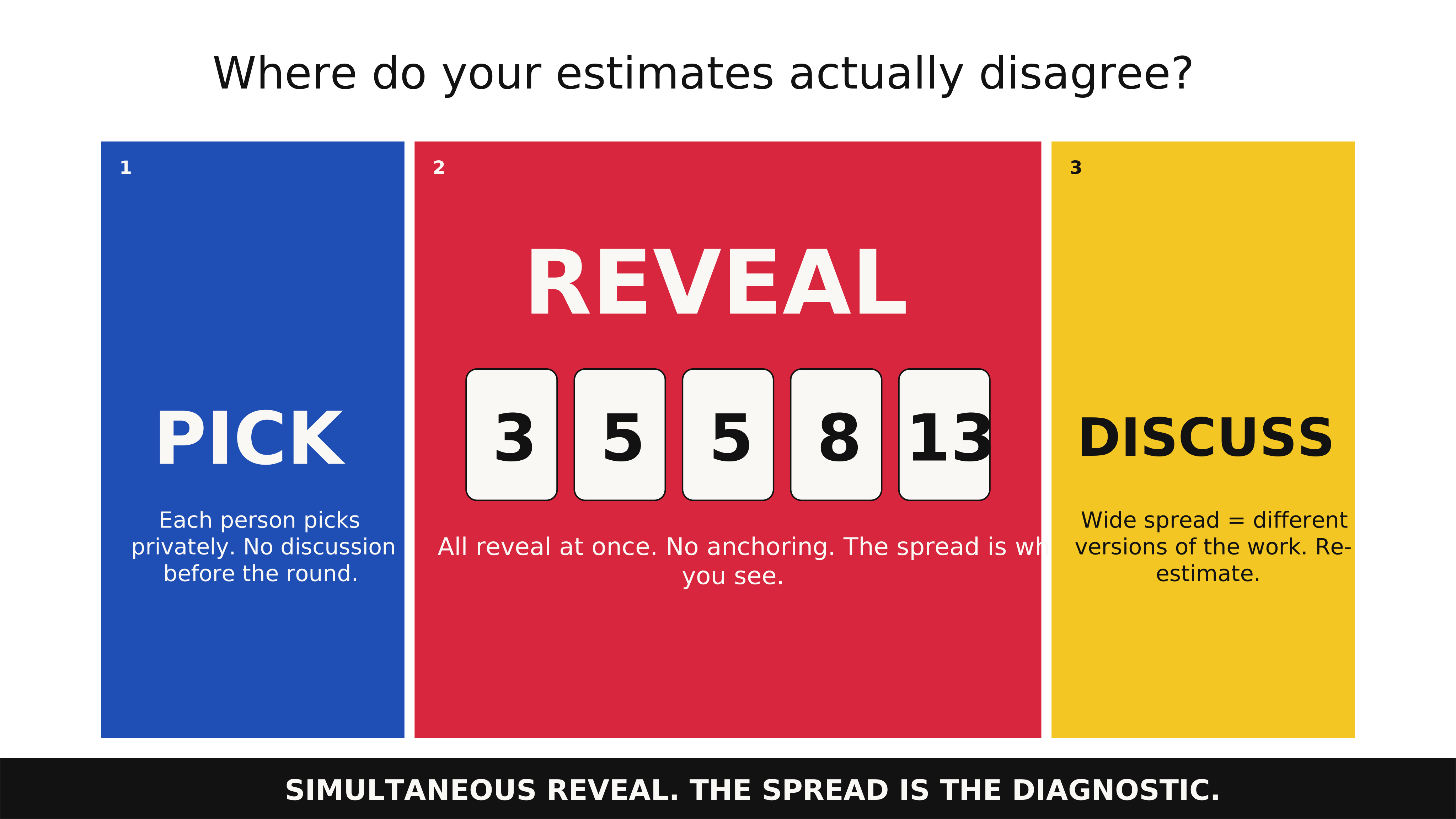
The real value isn't the numbers — it's the conversation after. When estimates diverge, the discussion reveals different understandings of scope, approach, or risk that would otherwise surface mid-sprint as surprises. Over time, teams calibrate, and estimation consistency improves.
Use it for items the team will build soon; distant work stays unreliable regardless of method. It falls apart without genuine discussion of differences — if the team averages divergent estimates and moves on, the technique is theatre.
Your next move: When estimates diverge wildly in your next planning session, will you actually pause to find out why — or will you average it and move on, missing the disagreement that's about to cost you the sprint?
What it looked like for them
James Grenning, Object Mentor, 2002. Grenning was facilitating an Extreme Programming planning meeting with eight developers. Two senior engineers dominated the conversation, volleying ideas back and forth while the other six sat silent — "a virtual nap," as Grenning put it.
Estimation took about an hour per story. Drawing on his experience with Silent Brainstorming from Total Quality Management training at Teradyne, Grenning tried something different: he asked everyone to write their estimates on cards and reveal them simultaneously.
The divergent estimates surfaced immediately. The quiet developers had different assumptions about scope and complexity that the two loud voices had been papering over. The simultaneous reveal eliminated anchoring bias and gave every team member an equal voice.
Grenning had invented planning poker. The technique went on to become standard practice in agile estimation worldwide. The mechanism is simple: when estimates are visible simultaneously, the loudest person in the room can't set the anchor. The quietest person's number is just as visible.
“The deadline moved and nobody told my team.”