
Checklists
“Atul Gawande's technique of using concise, sequential steps for complex processes.”
Something went wrong that shouldn't have. The team knew the steps. Under pressure, one got skipped anyway.
Checklists are Atul Gawande's deceptively simple technique for codifying critical steps in repeatable processes. You write a brief, tested list — five to nine items — capturing what experts forget under pressure, freeing mental capacity for the decisions that actually need judgement.
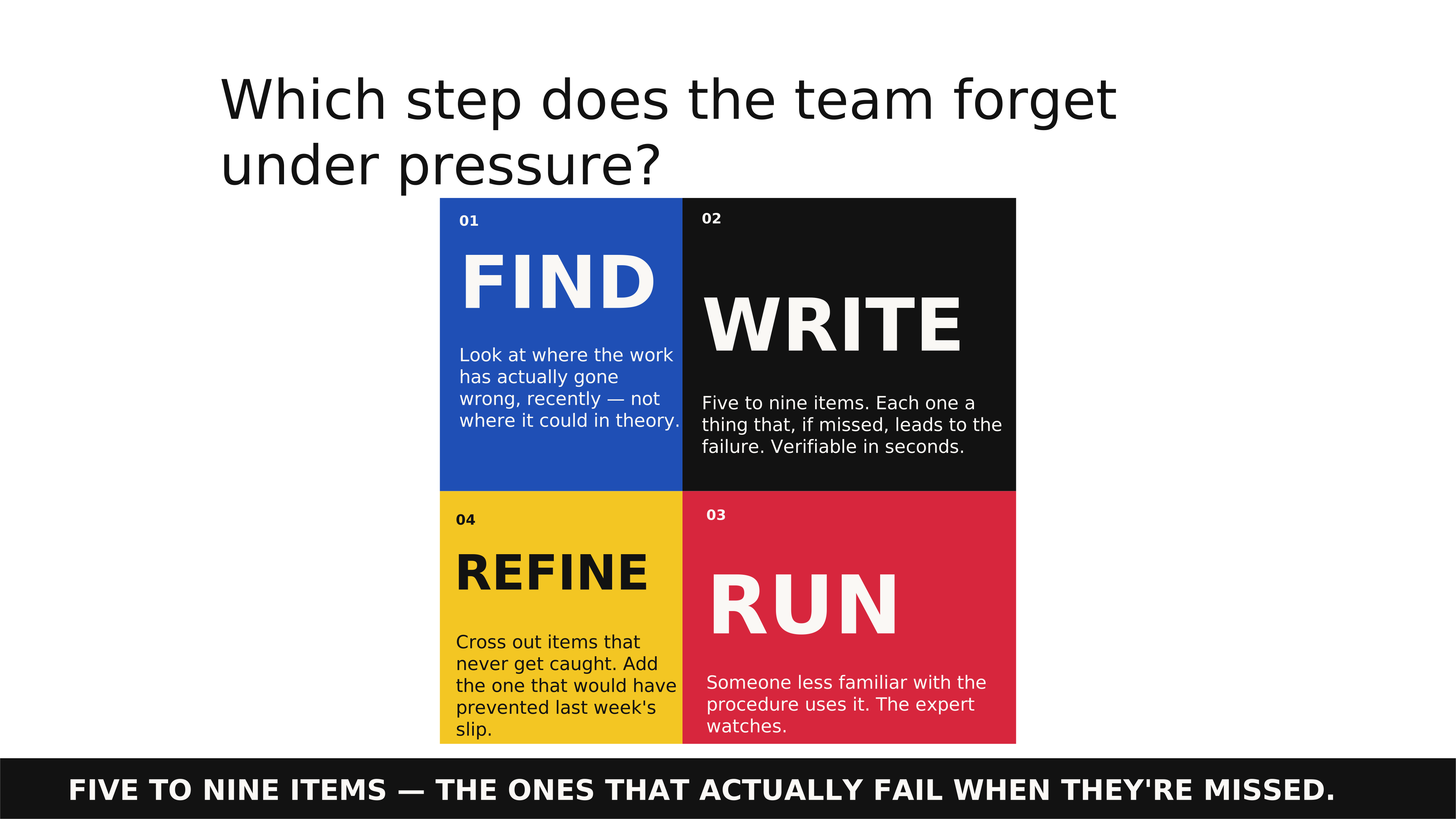
The strength is reliability at the point where human attention fails. Gawande's The Checklist Manifesto documented dramatic improvements in surgical outcomes, aviation, and construction — all fields where the work is understood but the stakes of a missed step are severe.
For product teams, they earn their keep in releases, incident response, and any process where a forgotten step has real consequences. They fail when applied to novel or creative work, or when the checklist becomes a compliance exercise that replaces thinking rather than supporting it.
Your next move: Which step did your team forget under pressure last time things went wrong — and is it on a checklist yet, or are you trusting memory to do better next time?
What it looked like for them
A growing engineering team, mid-2010s. The team had scaled past twenty engineers and one senior architect had become the bottleneck. Every code review, every architecture decision, every production deployment ran through him.
Not because of ego — because he was the only person who held the full picture of how the system worked. The team's response was to distribute his knowledge into checklists: deployment procedures, review criteria, architecture decision records.
The checklists codified what had previously lived in one person's head. When the architect stepped back from day-to-day reviews, velocity went up. Quality didn't drop as much as anyone had feared.
The protection the bottleneck had been offering — the sense that nothing could go wrong because one person was watching everything — turned out to be smaller than everyone assumed. The checklists didn't replace judgement. They replaced the need for one person's judgement to be present at every decision point. That was enough.
“The deadline moved and nobody told my team.”