
Walking Skeleton
“A tiny end-to-end implementation exercising the full architecture with minimal functionality.”
You've built each piece in isolation. Integration is scheduled for later. Nobody's tested whether the architecture holds together end to end.
A Walking Skeleton is a tiny implementation that exercises the full system architecture with minimal functionality. You wire every component together — front to back — and prove the integration works before building out features on top of it. The concept was popularised by Alistair Cockburn as a way to surface architectural risk early.
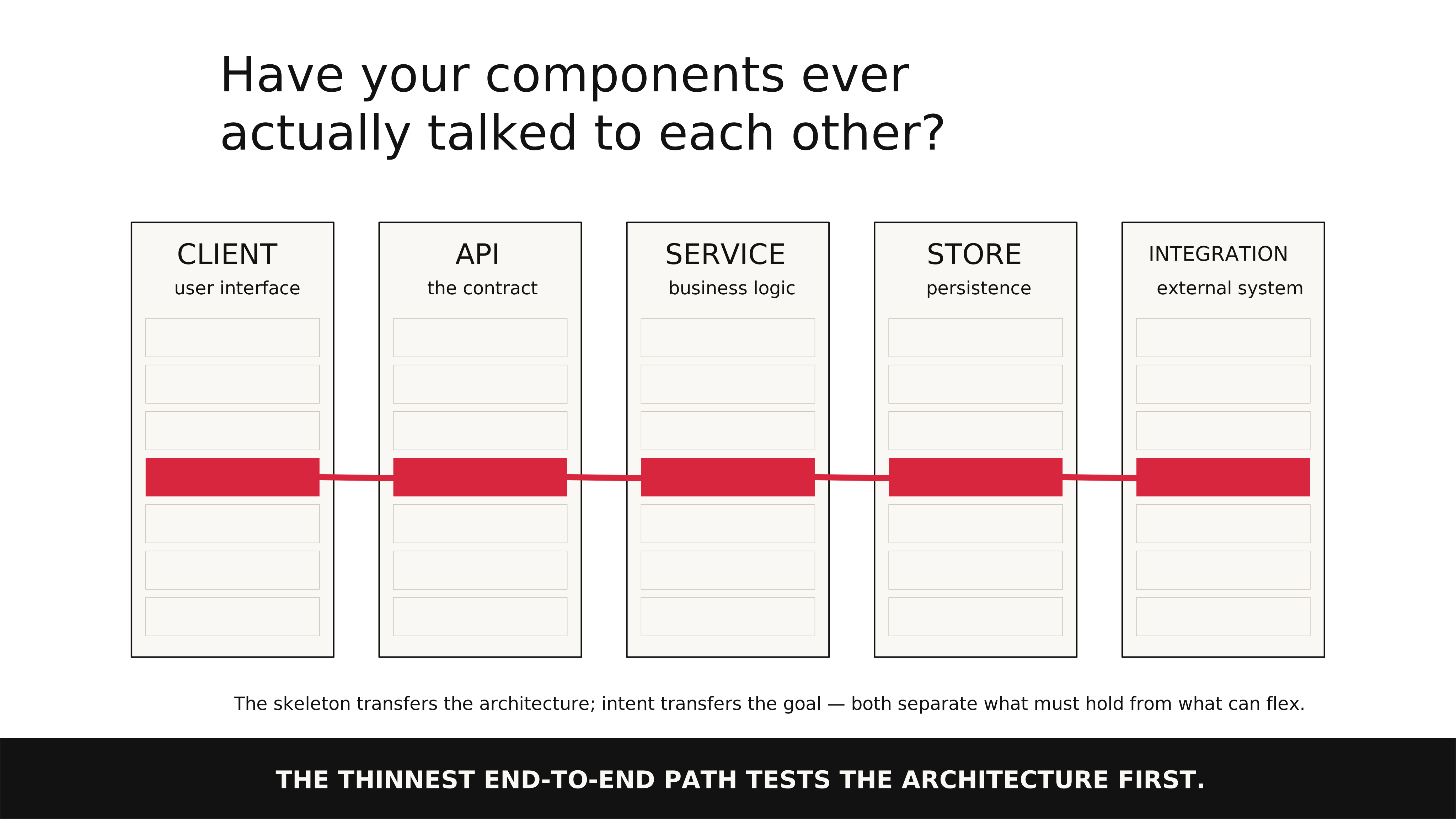
The unique strength is exposing integration problems that component-level thinking misses — problems far cheaper to fix now than after months of parallel development. Reach for it when integration risk is highest: distributed systems, novel architectures, or anything where the pieces have never been assembled before.
It falls apart for simple applications where the architecture is already proven, and it requires enough architectural clarity to know what "end to end" means for your system.
Your next move: Have the components in your system architecture ever actually talked to each other end-to-end — or are you about to find out under deadline pressure?
What it looked like for them
US Marines, Commander's Intent, ongoing. Detailed tactical plans don't survive contact with reality. Troops without instructions freeze. The Marines' solution: every mission briefing ends with a plain-language statement of the desired end-state and why it matters — separate from the tactical steps that might change in the field.
A walking skeleton works the same way. It's the thinnest possible version of the system that still runs end to end — not a prototype, not a demo, but a working frame that everything else hangs on.
The Commander's Intent doctrine transfers the intent rather than the context, trusting people to work the rest out as conditions change. A walking skeleton transfers the architecture rather than the features, trusting the team to flesh it out as understanding grows.
Both work because they separate the thing that must hold from the things that can flex. The Marines learned this from decades of plans that didn't survive first contact. Software teams keep relearning it from architectures that don't survive first sprint.
“The deadline moved and nobody told my team.”